
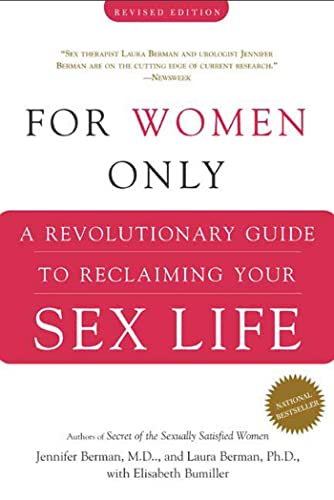
For Women Only
A revolutionary guide to reclaiming your sex life from the body that owns it
For Women Only was the first mainstream book by a board-certified urologist to treat female sexual dysfunction as a medical condition rather than a psychological one. When the Bermans began writing it in the late 1990s, the published clinical literature on women's sexual health was vanishingly thin — most of what existed had been adapted, often clumsily, from research originally done on men.
The book set out to fix that. It walked patients through the vascular, hormonal, neurological, and pharmacological causes of low desire and arousal disorder, and gave them a vocabulary their doctors did not yet have. It became a New York Times bestseller, was selected as a Good Morning America Book Pick, and was eventually translated into eighteen languages.
Two decades later, it remains the most-cited reference clinicians hand to patients who have spent years being told that what they are feeling is not real.
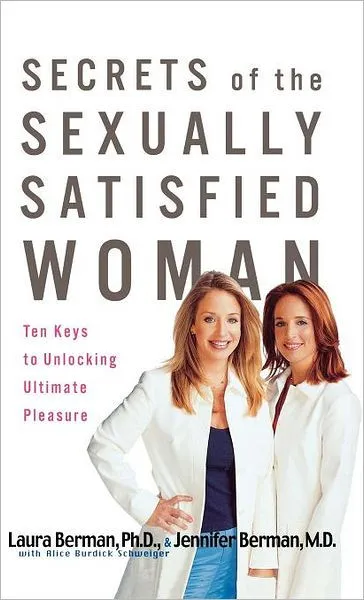
What they wrote.
Required reading. The first serious medical book to take women's sexual health as seriously as it takes the cardiology of middle-aged men.
An unflinching, plainly written look at what medicine has gotten wrong about women — and what to do about it.
The most useful book about female sexuality published in a generation. It assumes its reader is intelligent.
Specific, unembarrassed, grounded in twenty years of seeing patients who had been failed by the standard of care.
Two physicians, one diagnostic eye, and a refusal to let the conversation stay polite.
Reads less like a self-help book and more like the consultation you wish you could have had.
Why they still matter.

The Women's Health Initiative results have been re-evaluated. Bioidentical hormone therapy has moved from fringe to standard of care for the patients it's indicated for. The vocabulary these books gave women — vascular insufficiency, androgen decline, arousal-disorder differential — is now the vocabulary any reasonable clinic uses. That part has changed.
What hasn't changed is the fifteen-minute appointment, the referral to a therapist, the panel that wasn't drawn, the SSRI no one warned would do this. Women still walk into clinics with sexual complaints and walk out with the same answers their mothers got. The infrastructure of care still lags the science by twenty years.
These two books are still in print because the gap between what medicine knows and what most women are offered is still wide enough to need a bridge. They are the bridge most patients reach for first.